 PelletDeck
Traeger
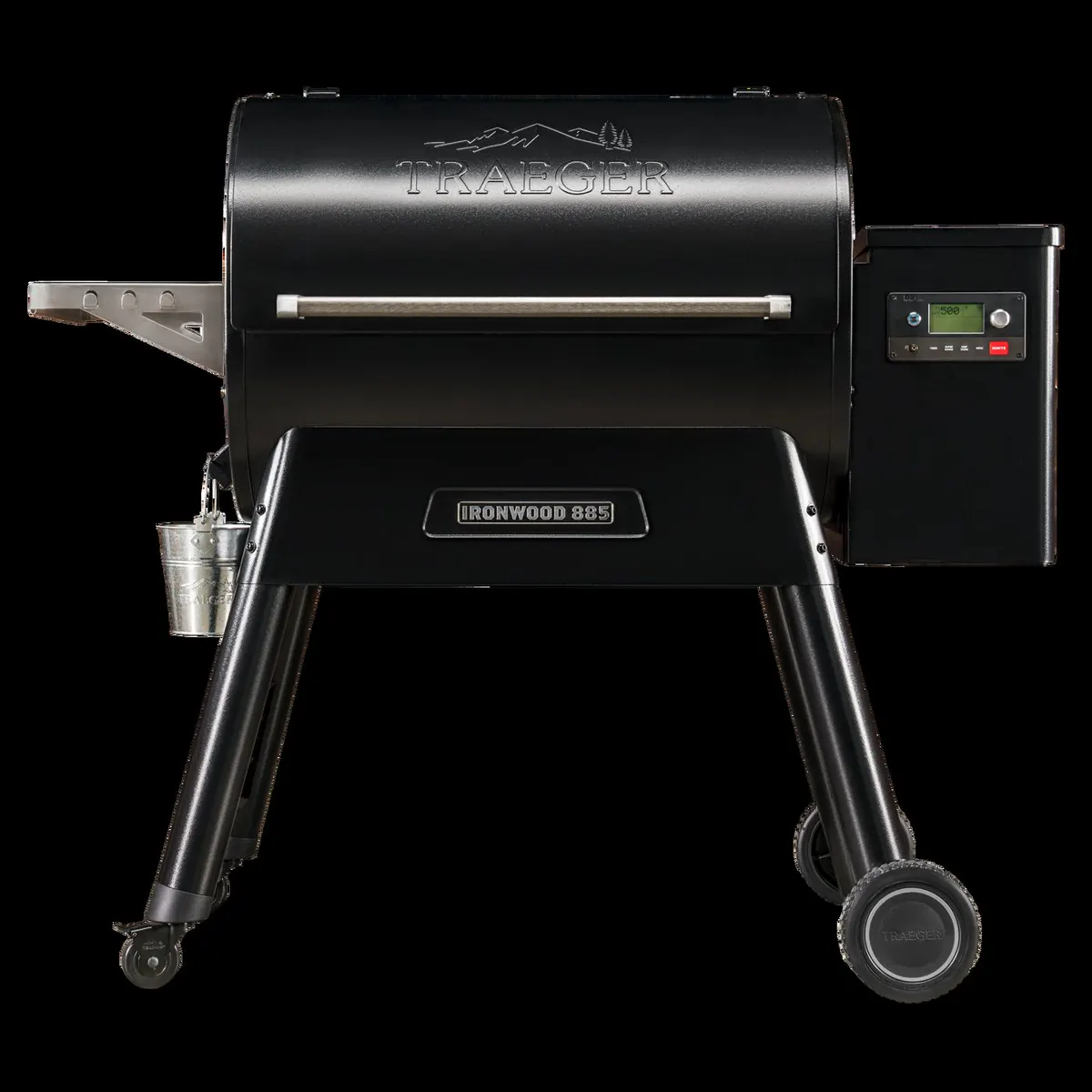
Ironwood 885 specs
Specs only. No invented smoke scores, no fake temperature graphs. If a number looks wrong for your exact SKU, trust the manual.
- Brand
- Traeger
- Listed cooking area
- 885 sq in
- Listed hopper
- 20 lb
- WiFi
- Yes
- Sear
- No
- Sear notes
- Super Smoke on many SKUs. No built-in gas sear.
- Street price band
- $1,200 to $2,000
- Listed warranty
- 3 years per the product page. Traeger's warranty policy page lists up to 7 years, tiered by part. Check your serial number.
- Listed temp range
- 165 to 500
- Listed max temp
- 500 F manufacturer ceiling, not a chamber probe reading
- Overnight run at 225 F
- ~20.7 hr, mild weather. Listed hopper minus the 0.35 lb startup pad, divided by the PelletDeck 225 F burn assumption. Same formula the calculator runs, so a colder night or a hotter set point comes out shorter. Not a lab overnight test.
- Listed weight
- 175 lb
- Controller
- WiFIRE
- Availability note
- Current-line or commonly sold name
- Spec source
- Traeger Ironwood 885 product page lists 885 sq in total on 2 grates, 20 lb hopper, 165 to 500 F: https://www.traeger.com/pellet-grills/ironwood/885. Ironwood generations differ. Warranty sources disagree: the product page FAQ says 3 years (https://www.traeger.com/pellet-grills/ironwood/885), while the Traeger warranty policy lists a 7-year limited warranty for D2 WiFIRE grills made after October 2021, tiered by part (https://www.traeger.com/service-warranty). Product page lists 175 lb total weight.
- Calculator burn assumption
- 0.95 lb/hr at 225 F. Planning number only. Not a lab test.
Hopper hours and pellets per cook
A 12 lb brisket at 225 F plans at about 16 hr 30 min, but in winter a full 20 lb hopper runs only about 9 hr 51 min, so an overnight brisket needs a refill around hour 9. In mild weather the same cook uses about 16.0 lb and finishes with only about 4.0 lb left, a margin thin enough that the calculator flags it.
| Set point | Mild (about 60 to 80 F) | Winter / sub-freezing |
|---|---|---|
| 225 F | 20 hr 41 min at 0.95 lb/hr | 9 hr 51 min at 1.99 lb/hr |
| 250 F | 18 hr 14 min at 1.08 lb/hr | 8 hr 41 min at 2.26 lb/hr |
| 275 F | 16 hr 15 min at 1.21 lb/hr | 7 hr 45 min at 2.54 lb/hr |
Same 20 lb hopper elsewhere in our database: the Traeger Ironwood 650 (about 24 hr 34 min), counting a full hopper at 225 F in mild weather on that grill's own assumed burn rate.
| Cook | Planned time | Mild (about 60 to 80 F) | Winter / sub-freezing |
|---|---|---|---|
| 12 lb brisket at 225 F | 16 hr 30 min | 16.0 lb | 33.3 lb (more than a full hopper) |
| 8 lb pork butt at 250 F | 10 hr 42 min | 11.9 lb | 24.6 lb (more than a full hopper) |
Those pounds include the startup pad and assume a full hopper at the start. For how meat, set point, and bag size change the total, see how many pounds of pellets a smoke really takes.
Each pellet figure opens that cook in the calculator with the Traeger Ironwood 885 already picked, or run the winter brisket for this grill in the calculator and change the weight, temp, or weather yourself. Wind, wet pellets, and a leaky lid are not in the math, and they usually burn more.
Notes
Bigger cook chamber, still a 20 lb hopper. Cold weather plus a packer brisket is a refill night on paper.
PelletDeck did not run this grill in a lab. The burn assumption exists so the calculator has a starting point. Override hopper size if your unit differs.